Why Choose Glass Containers for Food Storage?

Why Choose Glass Containers for Food Storage?

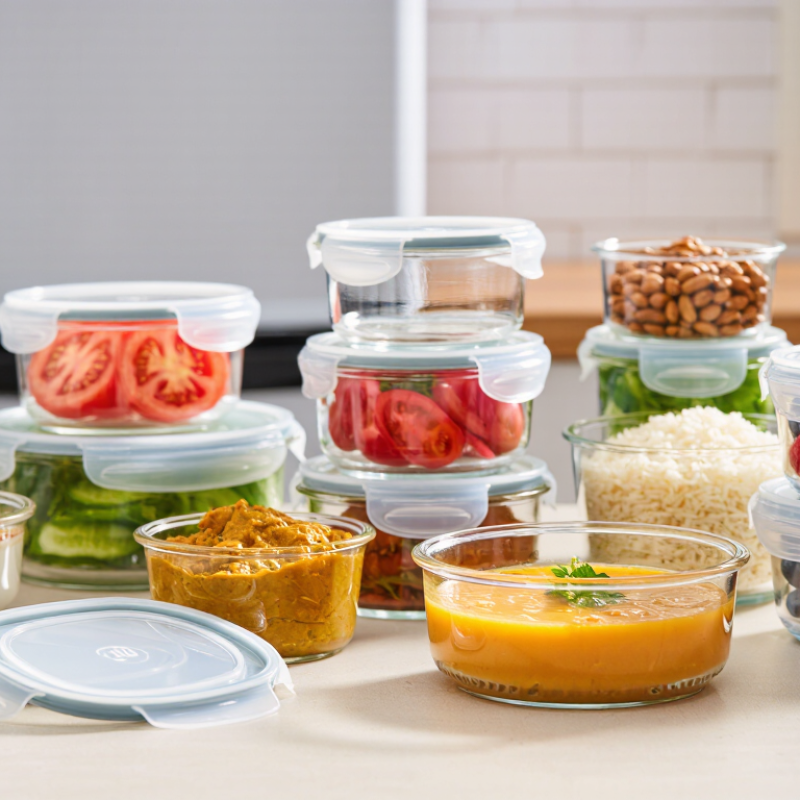
Glass Containers offer a clean, practical way to store everyday food. They keep their shape, resist odors, and do not absorb sauces easily. A tomato curry can sit overnight without leaving a red stain or lingering smell. That small detail matters in real kitchens.

Glass is also nonporous and chemically stable under normal food-storage conditions. It does not add flavor to fresh berries, cooked rice, or homemade soup. Many glass containers move safely from refrigerator to table, reducing the need for extra dishes. However, users must check the manufacturer’s instructions before using them in ovens, freezers, or microwaves. Sudden temperature changes can cause thermal shock. Glass can break.

“Glass is infinitely recyclable without loss in quality or purity,” says Andrés López, former CEO of O-I Glass, a major glass-packaging manufacturer. This statement reflects glass’s strong recycling advantage, although recycling systems differ by location. Not every community accepts the same items, and contaminated glass may be rejected.

Glass Containers also make food visible. A transparent lid or bowl can reveal leftovers before they become forgotten at the back of a refrigerator. That visibility may support better meal planning and reduce waste. Still, glass is heavier than plastic and can feel inconvenient during travel. Lids may wear out first, too.

The best choice depends on the food, storage time, and handling environment. Glass is not perfect. Yet its durability, neutrality, and reusability make it a thoughtful option for many households.
Why Choose Glass Containers for Food Storage?

Food-Contact Safety: FDA 21 CFR 177.1010 Sets Glass Standards

Why Choose Glass Containers for Food Storage?

Food-contact safety begins with the material, not the label. FDA 21 CFR 177.1010 sets specifications for borosilicate glass articles used with food. It addresses composition and extraction testing under defined conditions. This matters when containers hold acidic sauces, salty soups, or hot liquids. Properly manufactured glass generally offers a stable surface with limited interaction with food. Still, compliance is not automatic. Manufacturing quality matters.

A practical check is simple. Look for food-contact documentation, traceable testing, and clear use instructions. I would not treat a shiny surface as proof of safety. Scratches, thermal shock, or unsuitable closures can create other concerns. Test conditions also deserve attention because heat, acidity, and storage time can change migration behavior. The regulation supports confidence, but it does not replace responsible handling.

Glass also performs well in recovery systems. The U.S. Environmental Protection Agency reported 12.3 million tons of glass containers and packaging were generated in 2018, while 3.9 million tons were recycled. That represented a 31.3% recycling rate in its Advancing Sustainable Materials Management report. Reuse can reduce disposable packaging demand, although transport weight and washing energy need consideration. The choice is not perfect. It is a material decision requiring evidence, correct use, and honest evaluation.

Food Preservation: Nonporous Glass Resists Odor and Flavor Transfer

Why Choose Glass Containers for Food Storage?

Food Preservation: Nonporous Glass Resists Odor and Flavor Transfer

Glass has a smooth, nonporous surface, so it is less likely to absorb strong food odors or flavors than some materials. Store chopped garlic, tomato sauce, or citrus dressing in a clean glass container, and the next meal is less likely to carry a lingering taste. That matters when one container moves between savory leftovers and fresh fruit. Glass does not make food last forever, though. Safe storage still depends on clean containers, suitable temperatures, and timely refrigeration.

Clear walls also make contents easy to identify. A glance can reveal yesterday’s lentil soup or the last spoonful of yogurt, reducing forgotten leftovers. Lids need attention too: odors can cling to seals, especially if they are stained or not fully clean. Wash every part thoroughly and let it dry before storing it. Glass can be heavy, and it may break if dropped. I still find that easy visibility worth the extra care, but it is not ideal for every kitchen or trip.

Tips: Use separate containers for especially aromatic foods if their lids retain smells. Cool hot food before sealing, and check that the lid fits securely. A quick label helps, too. Glass is useful, not foolproof.

Heat Performance: Choose Rated Glass for Freezer-to-Oven Temperature Changes

Why Choose Glass Containers for Food Storage?

Heat performance matters when leftovers move from a freezer to a hot oven. Rated glass is engineered for controlled thermal shock, while ordinary glass may crack under sudden temperature changes. ISO 7458:2004 defines testing methods for thermal-shock resistance in glass containers. That standard does not make every glass dish oven-safe. Check the container’s marked temperature range first.

Borosilicate glass generally expands less than common soda-lime glass. Its thermal expansion coefficient is approximately 3.3 × 10⁻⁶ per degree Celsius, according to technical data summarized in ISO 3585. Lower expansion can reduce stress during heating. Still, temperature ratings vary by design, thickness, and manufacturing quality. A small chip can become a serious weakness.

Use care in real kitchens. Do not place a frozen container directly on a hot stovetop or under a broiler. Avoid pouring boiling liquid into an icy dish. I still prefer a short countertop rest before oven use. It feels slower, but the habit reduces shock. For food safety, the USDA recommends keeping refrigerated leftovers at 40°F (4°C) or below and using them within three to four days. The FDA Food Code sets cold holding at 41°F (5°C) or below. Glass helps with visibility and cleaning, but safe temperature handling remains your responsibility.

Reuse and Recycling: FEVE Confirms Glass Is Recyclable Without Quality Loss

Glass containers suit food storage because they are non-porous, reusable, and stable around common foods. They do not absorb curry aromas or tomato stains easily. A clean jar can move from the refrigerator to the dining table. That practical reuse reduces demand for new packaging, although washing still uses water and energy.

FEVE reports that glass can be recycled repeatedly without losing its basic quality or purity. Its European industry data recorded an average glass-packaging recycling rate of about 80% in recent years. That figure matters because recycled glass, known as cullet, can replace part of the raw material used in new containers. Less virgin material may mean lower furnace energy demand. The exact benefit depends on collection, transport, sorting, and furnace efficiency.

The U.S. Environmental Protection Agency reported a glass container recycling rate of 31.3% in 2018. The contrast with European data shows a difficult point: recyclability does not guarantee recycling. Local systems decide what actually happens. Food residue can contaminate collection loads, and heat-resistant cookware should not enter ordinary bottle-and-jar recycling. I have found that rinsing a container immediately is easier than cleaning dried sauce later. Still, glass is heavier than many alternatives, so long-distance transport can weaken its environmental advantage. Better refill systems could matter more than material choice alone.

Environmental Benchmark: EPA Reports a 31.3% U.S. Glass Recycling Rate

Why Choose Glass Containers for Food Storage?

Glass containers offer a practical way to store food without adding unwanted odors or flavors. They are transparent, so leftovers remain visible on a crowded refrigerator shelf. A clear container can prevent forgotten food from becoming waste. Many glass containers also handle hot meals better than some plastic alternatives, but users should follow the manufacturer’s temperature guidance.

The environmental question deserves careful attention. The U.S. Environmental Protection Agency reports a 31.3% glass recycling rate in the United States. That number is encouraging, yet it also reveals a serious gap. Most glass still does not return to the recycling stream. Recycling systems differ by community, and not every collection program accepts every type of glass. Checking local instructions matters.

I have found glass useful for weekly meal preparation. Tomato sauce leaves color behind, but it usually washes away without much effort. The heavier weight is noticeable. So is the risk of breaking a container near a hard sink. Glass is not automatically the perfect choice. It requires careful handling, clean sorting, and realistic habits.

Empty containers before recycling them, and remove food residue when local guidance requests it. Do not place broken drinking glasses or heat-resistant cookware in ordinary bottle-and-jar recycling unless your program specifically allows them. Small mistakes can contaminate an entire collection load. Better storage begins with a container that fits the meal, the shelf, and the local recycling system.